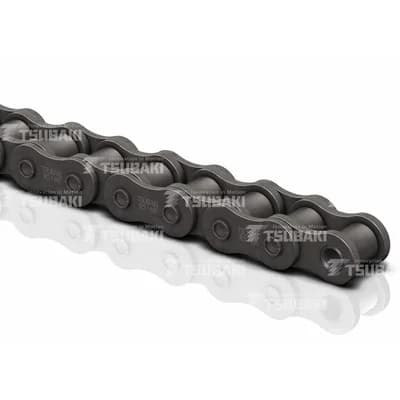
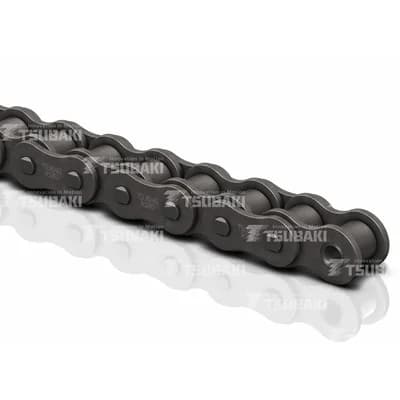
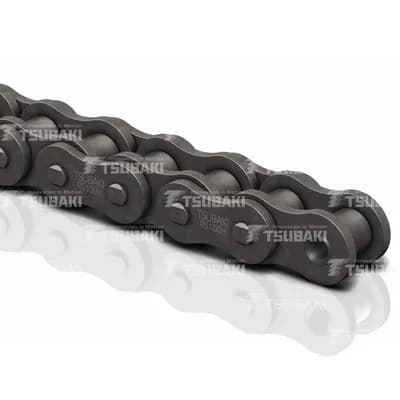
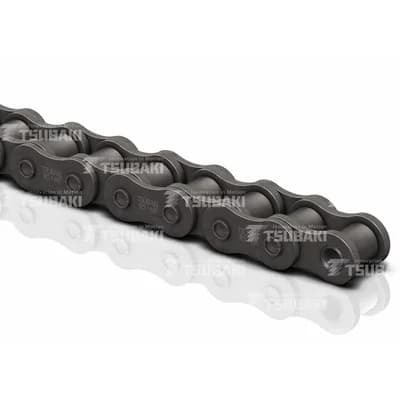
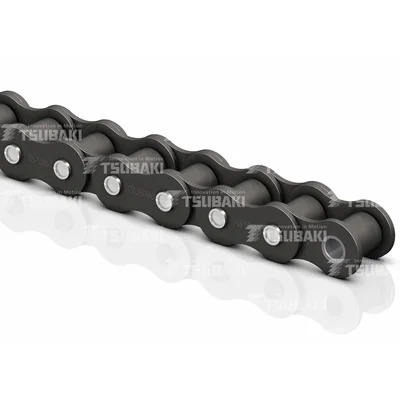
AR50A1X5M

ISO 606 Industrial Chains
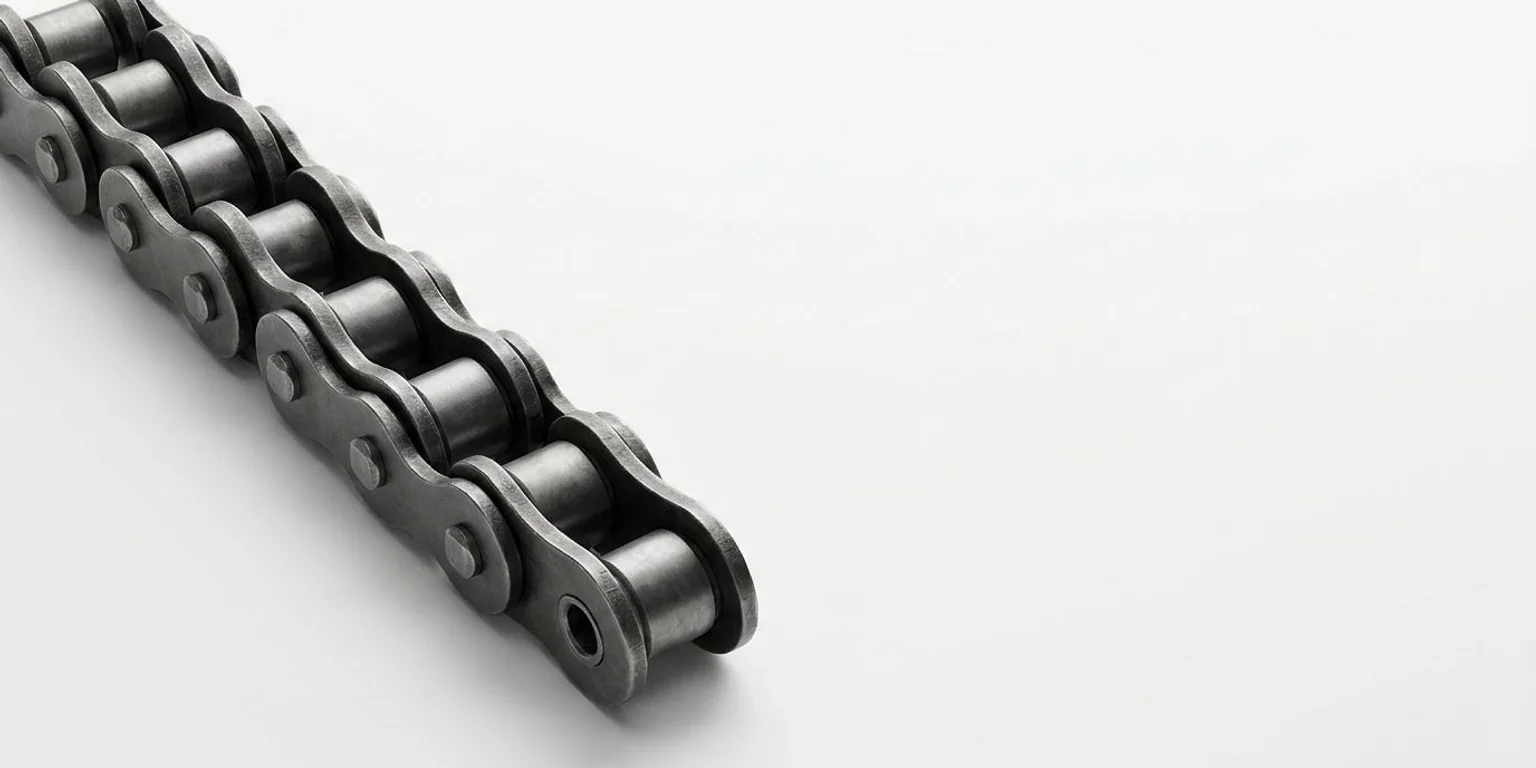
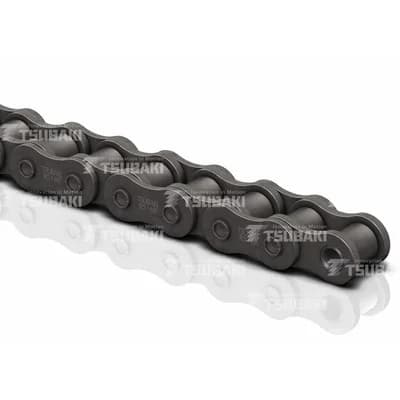
Industrial chains transmit power and motion between two parallel shafts via toothed sprockets. ISO 606 standardised roller chains (European series 06B to 32B, American 35 to 240), single, double or triple strand. Brands Tsubaki, Renold, Iwis, Wippermann, Witra.
Marques disponibles en chains
Affichage 1–24 sur 2099 références
AR60A1X5M
RENOLD A&S Chaine 60A1 X 5M
CT-10B2NU
CIR GUIDE CHAINE NU.VENDU AU M
05B1D
RENOLD SPECIAL CHAINE PAS 5MM
04B1X5MSRC
CIR CHAINE SRC DIN 04 BTE 5M
415B-083
CIR CHAINE PAS 12,7 DIN 415B-083

35A1X10FTD
RENOLD A&S CHAINE TRANSMIS. ASA 35-1 (AU M)

AR40A1X5MD
RENOLD A&S CHAINE RENOLD A&S ASA40-1 (AU M)
06B1SS
TSUBAKI CHAINE TSUBAKI 06B1 INOX (AU M)
04B1ARSRC
CIR ATTACHE RAPIDE SRC DIN 04
415B-083 MDJ
CIR ATTACHE RAPIDE 415B-083
AR80A1X5M
RENOLD A&S Chaine 80A1 X 5M
AR08B1X5M
RENOLD A&S Chaine 08B1 X 5M
AR60H1X5M
RENOLD A&S Chaine renforcée 60H1 X 5M

12B1 5M
TSUBAKI GT4 Winner BS Chaîne à Rouleaux Standard

16B1 5M
TSUBAKI GT4 Winner BS Chaîne à Rouleaux Standard

25 1 ASA 3.05M
TSUBAKI G8 ASA Chaîne à Rouleaux Standard
80 1 ASA AGRI-TUFF 3.05M
TSUBAKI Chaîne de transmission
60 1 ASA AGRI-TUFF 3.05M
TSUBAKI Chaîne de transmission
50 1 ASA AGRI-TUFF 3.05M
TSUBAKI Chaîne de transmission
40 1 ASA AGRI-TUFF 3.05M
TSUBAKI Chaîne de transmission

100H 1 ASA 3.05M
TSUBAKI Chaîne Séries H ASA Renforcée

06B1 PLAQUE DROITE 5M
TSUBAKI GT4 Winner BS Chaîne à Rouleaux Standard

12B1 LAMBDA 5M
TSUBAKI Chaîne Lambda BS Autolubrifiante
About Chains
The roller chain is the most widely used flexible-link transmission solution in industry. Its structure — inner and outer plates, pins, bushes, rollers — allows for high loads, varied reduction ratios and a long service life under correct lubrication.
Two dimensional series coexist. The European ISO 606 series (06B = 9.525 mm pitch, 08B = 12.7 mm, 10B = 15.875 mm, 12B = 19.05 mm, 16B = 25.4 mm, up to 32B = 50.8 mm) covers general industry in Europe. The American ANSI B29.1 series (35, 40, 50, 60, 80, 100, 120, 140, 160, 200, 240) remains common in agricultural machinery and equipment of American origin. The pitches are not directly compatible.
The multi-strand variants (single, double "DR", triple "TR") add load capacities without increasing the linear speed. The designation 08B-2 refers to an 08B chain in double strand.
The transmission capacity depends on the pitch, the number of strands, the number of teeth on the small sprocket (generally 17 minimum) and the rotation speed. Manufacturer charts allow precise sizing. For heavy-duty service, choose a reinforced chain (suffix H) or stainless steel AISI 304/316L.
Lubrication — by oil bath, splash or manual — is critical: a dry chain wears 10 times faster. For maintenance-free environments, self-lubricating chains (O-ring seals, sintered bronze bushes) maintain lubrication 3 to 5 times longer. Maintenance includes checking tension (typical sag of 1-2% of the centre distance) and measuring elongation (3% maximum before replacement).
Frequently asked questions — Chains
How to choose between a European ISO 606 series chain and an American ANSI B29.1 series?
The choice depends primarily on the origin of the equipment. The European ISO 606 series (from 06B to 32B) is standard for general industry in Europe, whereas the American ANSI B29.1 series (from 35 to 240) mainly equips agricultural machinery and machines of American origin. The pitches of these two series are not compatible, which prohibits any direct replacement of one series by the other on an existing installation.What is the actual difference between a single, double DR or triple TR chain?
Multi-strand variants make it possible to significantly increase the load capacity of a transmission without changing the linear speed. The numerical designation, such as 08B-2 for a double-strand version, indicates the number of chains working in parallel on the same pins. The choice between a single, double DR or triple TR configuration must be validated according to manufacturer charts to meet the power requirements of your installation.In which cases should a reinforced or stainless steel chain be preferred?
For applications subject to heavy-duty service, it is recommended to opt for a reinforced chain, identifiable by the suffix H, which offers increased resistance. If the working environment requires corrosion resistance, the use of AISI 304 or 316L stainless steel chains is imperative. These technical choices must be correlated with the pitch and the number of teeth on the small sprocket to guarantee the longevity of the system.Why use a self-lubricating chain rather than a standard version?
Lubrication is critical to avoid premature wear, as a dry chain wears 10 times faster. Self-lubricating chains, fitted with O-ring seals or sintered bronze bushes, are designed to maintain lubrication 3 to 5 times longer than standard models. They are particularly suitable for environments requiring reduced maintenance cycles or maintenance-free operation.What are the key indicators for chain maintenance and replacement?
Maintenance is based on two essential checks. Firstly, tension must be verified, with a typical recommended sag of 1 to 2% of the centre distance. Secondly, the elongation measurement is decisive: as soon as elongation reaches 3%, replacement of the chain is mandatory. Compliance with these thresholds is essential to prevent any risk of breakage or degradation of the associated sprockets.Should I choose a chain or a belt for my transmission?
The roller chain is a flexible-link transmission solution allowing high loads and varied reduction ratios. It is distinguished from the belt by its rigid structure made up of plates, pins, bushes and rollers. This technical choice is to be preferred when load constraints and service life under correct lubrication are paramount for the proper operation of your mechanism.
Chains category
Roller Chain
Mechanical Transmission Chain
Roller Chain by the Metre
Long Pitch Roller Chain